




Deciding whether to pursue euthanasia for a cherished pet is an emotionally difficult and significant choice. This guide delivers clear, evidence-informed guidance to help owners recognise when euthanasia may be the most humane option. We review observable signs—changes in mobility, behaviour and overall quality of life—explain how these relate to medical conditions, and outline the emotional considerations and eco-conscious aftercare options such as aquamation.
What Are the Key Signs Indicating When to Consider Pet Euthanasia?
Choosing euthanasia requires identifying objective signs of reduced quality of life, including marked behavioural change, persistent or uncontrolled pain, and a clear loss of interest or joy in normal activities.
- Mobility Issues: If your pet has difficulty moving, experiences weakness, or demonstrates signs of pain during mobility, it may indicate significant discomfort or suffering.
- Decreased Appetite: A substantial drop in appetite or inability to enjoy food can be a strong indication of a deteriorating health condition.
- Behavioral Changes: Notable shifts in behavior like withdrawal from interaction, excessive vocalization, or signs of distress such as panting or pacing can signal that your pet is in pain or discomfort.
These signs warrant prompt veterinary evaluation to identify underlying causes and to determine whether palliative care or euthanasia is the most appropriate course.
How Do Changes in Mobility and Behavior Signal Pet End of Life?
Careful observation of mobility and behaviour provides measurable indicators of decline; reduced activity often coincides with other signs of physical distress.
Conditions such as severe arthritis or progressive systemic disease can substantially impair mobility and increase pain. Behavioural changes—withdrawal, hiding or excessive sleeping—may reflect pain or the inability to engage in previously enjoyed activities. Identifying these patterns helps assess whether quality of life has diminished meaningfully.
Which Medical Conditions and Pain Indicators Suggest Euthanasia May Be Appropriate?
Certain medical conditions are commonly associated with the need to consider euthanasia. Advanced illnesses such as late-stage cancer, renal failure and degenerative neurological diseases can lead to prolonged, cumulative suffering.
Clinical indicators—uncontrolled chronic pain despite medication, recurrent vomiting, respiratory distress or profound lethargy—require serious consideration. When symptoms do not respond to treatment, owners may consider humane options as a compassionate response.
Clinical literature and veterinary guidance can support owners in understanding the range of conditions that may necessitate this difficult decision.
Canine Chronic Kidney Disease: Palliative Care and Euthanasia Decision Tool
A Comprehensive Decision-Making Framework for Canine Chronic Kidney Disease: Guiding Palliative Care and Euthanasia ConsiderationsA Holistic Decision-Making Tool for Canine Chronic Kidney Disease: Navigating Palliative Care and Euthanasia, 2026
How Can Pet Owners Assess Quality of Life to Decide If Euthanasia Is Right?
To determine whether euthanasia is the most humane option, owners should conduct a structured assessment of quality of life that includes physical condition, pain control, appetite and the pet’s interactions with family members.
Key criteria—mobility, enjoyment of food and mental awareness—offer measurable indicators. Tracking changes across these domains provides objective information to inform decisions.
Applying a formal, systematic approach can help owners make a clearer, evidence-based decision during this difficult time.
Euthanasia Decision-Making Framework and Quality of Life Scoring for Geriatric Animals
The decision to perform euthanasia in geriatric zoo mammals is typically a highly intricate process, encompassing ethical, medical, emotional, and occasionally political considerations. However, post-mortem examinations frequently reveal advanced pathological changes in organs and/or the musculoskeletal system. Consequently, we hypothesize that euthanasia is often delayed, compromising the animal’s welfare. The objective of this study was to facilitate and establish an initial, objective decision-making framework for the euthanasia of geriatric zoo mammals. A scoring system to assess the physical condition and quality of life in aging zoo mammals is presented, developed through retrospective and prospective investigation of 70 geriatric zoo mammals across five European zoos.A scoring system to evaluate physical condition and quality of life in geriatric zoo mammals, 2007
What Are the Common Quality of Life Measurement Tools for Pets?
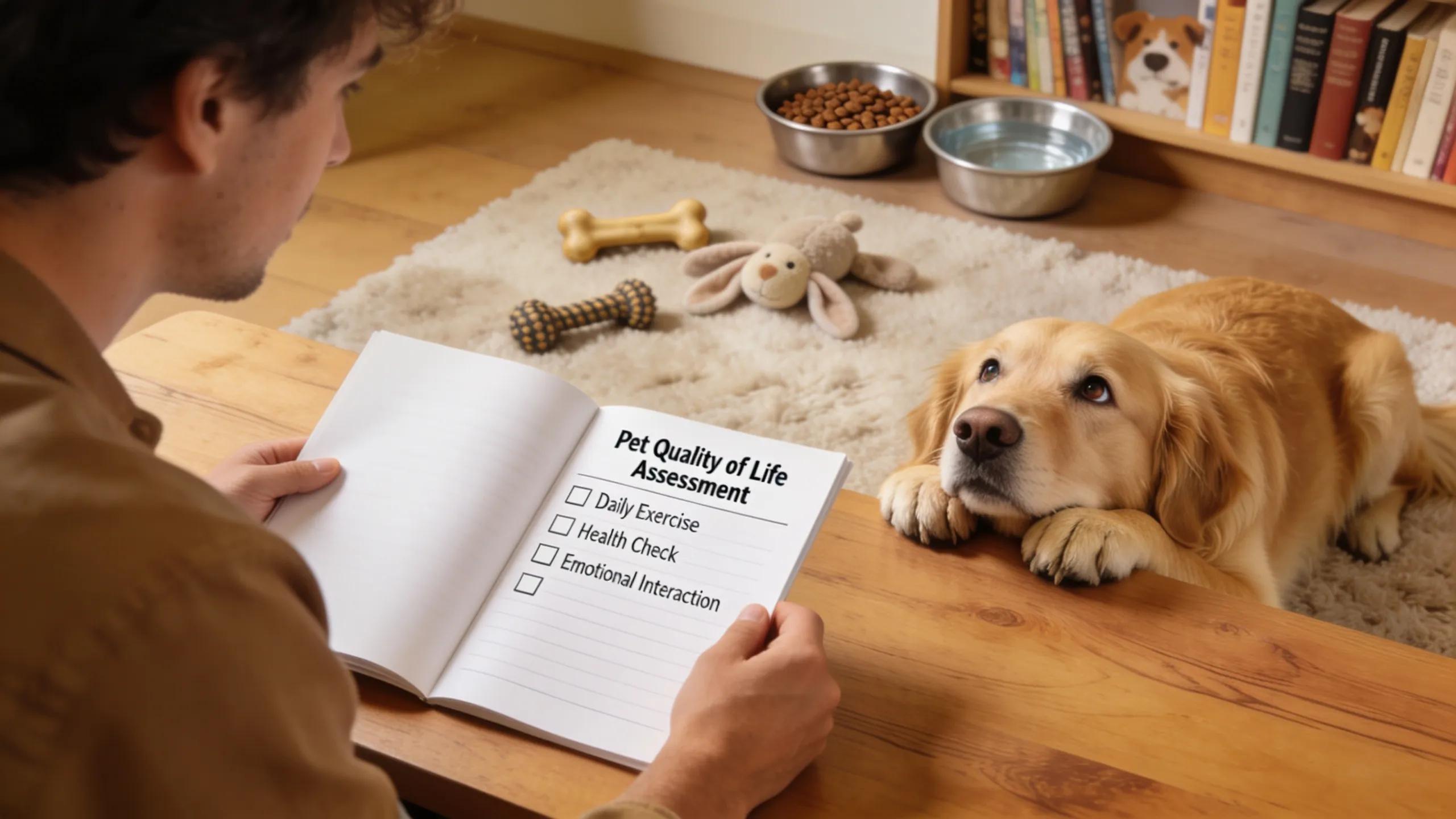
Common assessment tools provide structured scales and checklists to evaluate multiple dimensions of a pet’s wellbeing, making observations more consistent and comparable.
| Tool | Description | Usage |
|---|---|---|
| The HHHHHMM Scale | Measures happiness, hurt, hunger, hydration, mobility, and more | Quantitative assessment of quality of life |
| Quality of Life Assessment Framework | Checklist assessing different criteria such as pain and interaction | Comprehensive framework for decision-making |
| Veterinary Pain Scales | Uses numeric rating systems to quantify pain impact | Provides specific metrics for veterinarians |
Using these validated tools supports clear, evidence-based discussions with veterinary professionals about the most appropriate course of action for a specific pet.
How Do Emotional and Ethical Factors Influence the Euthanasia Decision?
The emotional bond between owners and their pets significantly affects decision-making; feelings of guilt, sadness and fear of letting go are common and expected.
Ethical considerations—minimising suffering and preserving the pet’s dignity—should inform the process. A veterinarian can provide clinical context to help balance compassion with responsibility.
Weighing both owner perspectives and professional veterinary advice offers a balanced view of the ethical and emotional dimensions involved.
Decision-Making Factors in Companion Animal Euthanasia: Owner and Veterinarian Perspectives
Factors Influencing Decision-Making in Companion Animal Euthanasia: A Mixed-Methods Study of Pet Owners and VeterinariansFactors Influencing Decision-Making in Companion Animal Euthanasia: A Mixed-Methods Study of Pet Owners and Veterinarians, 2026
What Is the Pet Euthanasia Process and How Does Eco-Friendly Aquamation Support It?
Veterinary euthanasia is typically performed after sedation and involves an intravenous agent that results in a peaceful passing; the procedure is designed to minimise stress and discomfort for the animal.
Aftercare is a distinct part of the process. Aquamation is an eco-conscious alternative to traditional cremation that uses water and an alkaline solution to reduce remains; it is chosen for its lower environmental impact and its gentle handling of the pet.
What Steps Are Involved in the Aquamation Process as an Alternative to Traditional Cremation?

The aquamation process follows defined steps to ensure respect and environmental responsibility:
- Preparation: The pet is prepared and placed in the aquamation chamber.
- Aquamation Process: The process occurs typically over 6-8 hours, utilizing water and heat to break down the organic material.
- Finalization: Once completed, the remaining byproducts are processed and can be returned to the pet owner.
This method reduces carbon emissions compared with traditional cremation and provides a respectful alternative for aftercare.
How Does Aquamation Benefit Pet Owners and the Environment Compared to Conventional Methods?
Aquamation delivers multiple benefits: reduced greenhouse gas emissions relative to cremation, meaningful memorial options, and a process that many owners find more reassuring during bereavement.
This eco-friendly option honours the pet’s memory while contributing to environmental stewardship by creating new life.
What Memorialization Options Are Available After Pet Euthanasia?
After a pet’s passing, a range of memorial options can assist owners in grieving and in honouring the life their companion shared with them.
Personalized tributes—such as a remembrance stone or memory book—or living memorials, like planting a tree, offer tangible ways to remember and pay tribute.
Which Eco-Conscious Memorial Products and Ideas Can Honor Your Pet?
For owners seeking environmentally responsible memorials, options include biodegradable urns, seed packets or living memorial kits, and keepsakes made from recyclable materials.
These alternatives both honour the pet and align with sustainable practices.
How Can Nutrient-Rich Fertilizer From Aquamation Serve as a Living Memorial?
Byproducts from aquamation can be processed into nutrient-rich fertilizer that serves as a living memorial, supporting plant growth and creating a lasting, natural tribute.
Planting flowers or a tree with this material allows owners to cultivate a meaningful, living space that reflects the bond they shared with their pet.
How Can You Arrange Pet Euthanasia and Aftercare Services Online in New York City?
In major urban areas such as New York City, owners can arrange euthanasia and aftercare services online to streamline logistics and reduce stress during a difficult period.
To begin, owners should:
- Research local veterinarians who offer in-home euthanasia services.
- Assess aftercare options available, including aquamation services such as pet cremation in NYC, to determine what best fits their values.
- Book appointments through the respective vet’s website or customer service.
This organised approach helps ensure that logistics for euthanasia and aftercare align with the needs of the pet and the family.
Frequently Asked Questions
What factors should I consider when deciding on pet euthanasia?
Evaluate your pet’s overall quality of life, pain levels and capacity to enjoy daily activities. Consider mobility, appetite and social interaction, and discuss your observations with a veterinarian who can provide a clinical assessment to determine whether continuing treatment meaningfully improves welfare.
How can I prepare emotionally for the decision of euthanasia?
Prepare by acknowledging grief and allowing time to reflect on your pet’s life. Writing down memories, speaking with trusted friends or family, and consulting pet loss support groups or a therapist can help you process emotions and arrive at a considered decision.
Can euthanasia be performed at home, and what does that involve?
Yes. In-home euthanasia is available and allows the pet to pass in a familiar environment surrounded by family. The procedure typically involves a sedative followed by an injection that ensures a peaceful transition; communicate preferences with the veterinarian in advance to arrange a respectful experience.
What should I expect during the euthanasia process?
Typically, a veterinarian sedates the pet to ensure calmness, then administers the euthanasia solution. Most animals pass peacefully in the presence of loved ones. Given the emotional nature of the event, take time to say goodbyes and consider a support plan for afterwards.
Are there any aftercare services available besides cremation?
Yes. Options include aquamation—an eco-friendly method using water and an alkaline solution—biodegradable urns and memorial nature products that combine remains with soil to grow trees or flowers. These alternatives offer meaningful ways to memorialise your pet while supporting environmental responsibility.
How can I support my other pets during this time?
Support other pets by maintaining routines, monitoring behaviour for signs of stress, and providing additional comfort and attention. Involving them in low-key memorial activities and allowing time to adapt can help their emotional adjustment.
Conclusion
Recognising when euthanasia may be appropriate requires careful observation of clinical signs and consultation with veterinary professionals. Staying informed helps prioritise your pet’s comfort and dignity. Consult our resources for assessment tools and aftercare options that align with your values, and visit our website to learn how we can assist in honouring your companion.
